Tractor Names and Pictures: Your 2025 Buying Guide
Choosing the right tractor is a critical investment for any farmer, impacting farm efficiency and profitability. This guide showcases top tractor models, complete with images, specifications, and expert insights to simplify your decision-making process in 2025. We’ll explore powerful machines and the latest technology, empowering you to navigate the agricultural equipment market with confidence. For even more tractor name ideas, check out this fun resource.
A Showcase of Farming Powerhouses: Tractors, Names, and Pictures
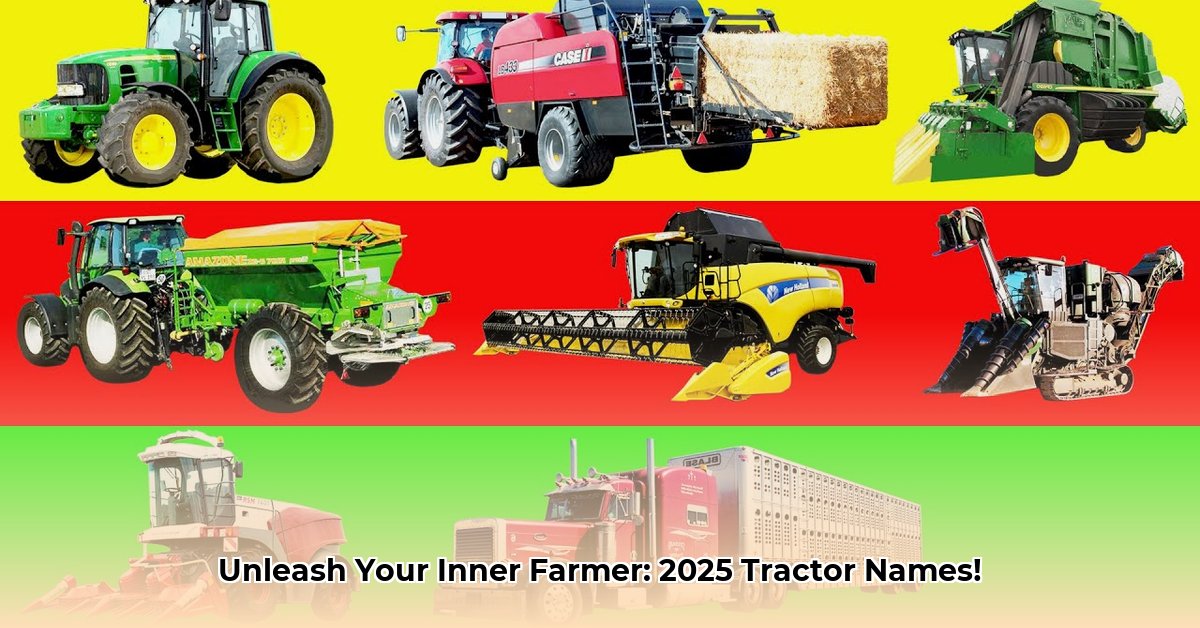
This selection highlights popular tractors categorized by typical application. Remember, this is just a glimpse of the diverse models available – the tractor market is constantly evolving!
| Tractor Name & Model | Manufacturer | Image (Placeholder) | Key Specs | Description |
|---|---|---|---|---|
| John Deere 6R Series | John Deere | [Image Placeholder] | 150-250 HP, 6-cylinder, AutoPowr | A versatile workhorse for large farms, renowned for reliability and adaptability to various farming tasks. |
| Kubota M7 Series | Kubota | [Image Placeholder] | 130-170 HP, 4-cylinder, HST | Powerful yet maneuverable, ideal for mixed farming or smaller acreages. Offers excellent fuel efficiency. |
| New Holland T7 Series | New Holland | [Image Placeholder] | 270-315 HP, 6-cylinder, Auto Command | High-performance machine for large-scale operations; incorporates advanced technology for precision farming. |
| Case IH Magnum Series | Case IH | [Image Placeholder] | 340-400 HP, 6-cylinder, AFS Connect | Top-of-the-line power and precision farming capabilities. Offers advanced automation features. |
| Massey Ferguson 8S Series | Massey Ferguson | [Image Placeholder] | 205-305 HP, 6-cylinder, Dyna-VT | Combines power and efficiency with a strong emphasis on operator comfort and ease of use. |
| Mahindra 25 HP Compact Tractor | Mahindra | [Image Placeholder] | 25 HP, 3-cylinder, Manual | Ideal for smaller farms, vineyards, or orchards; known for its exceptional fuel economy per hour of operation. |
(Note: Replace "[Image Placeholder]" with actual high-quality images. Consider adding more models for diverse applications like vineyards, orchards, and landscaping.)
Technological Advancements: Tractors Get Smarter
Modern tractors have undergone a technological revolution. Let's explore some key advancements:
Autonomous Operation: Self-driving tractors are becoming increasingly prevalent, particularly on large farms. This technology promises to boost efficiency and reduce labor costs. However, the level of autonomy varies significantly between systems. How will this influence the future of farming?
Precision Farming Technologies: GPS, sensors, and sophisticated data analysis are now integral parts of modern tractors. This precision approach minimizes waste, maximizing yields and promoting sustainable agricultural practices. What impact does this have on resource management?
Engine Efficiency and Emissions Reduction: Today's engines boast significantly improved fuel efficiency and reduced emissions compared to their predecessors. Ongoing research focuses on even cleaner and more efficient technologies. What are the environmental implications of these advances?
Market Trends: A Competitive Landscape
The tractor market is highly competitive, with established brands facing strong competition from emerging manufacturers. The demand for sustainable and technologically advanced tractors is a key driver of innovation. This competitive pressure benefits consumers, leading to better value and improved features. What are the long-term effects of this competition?
Sustainability: Farming Responsibly
Many modern tractors are designed with environmental considerations in mind. Features like reduced fuel consumption, minimized soil compaction, and optimized planting techniques contribute to sustainable farming practices. This trend aligns with the growing demand for environmentally conscious agriculture. How important is sustainability to your farming operation?
Choosing Your Tractor: A Strategic Approach
Selecting the right tractor requires careful consideration of several factors:
Farm Size: Small farms benefit from compact tractors, while large operations necessitate more powerful models. Consider the scale of your operations and the types of work involved.
Crop Type: Different crops demand specific tractor capabilities. Some tractors are optimized for particular tasks, such as harvesting or tilling. Consult with your local dealer for guidance on the best fit for your crops.
Budget: Tractor prices vary enormously. Establish a realistic budget and explore various financing options if necessary. Include operating costs, maintenance, and potential repairs in your budget.
This guide provides a valuable starting point for your research. Consult with local dealers, compare specifications thoroughly, and if possible, test drive different models before making your final decision. Remember, the right tractor is a key element of a successful farm.